


UK Private Number Plate Statistics 2025: Who's Really Buying?
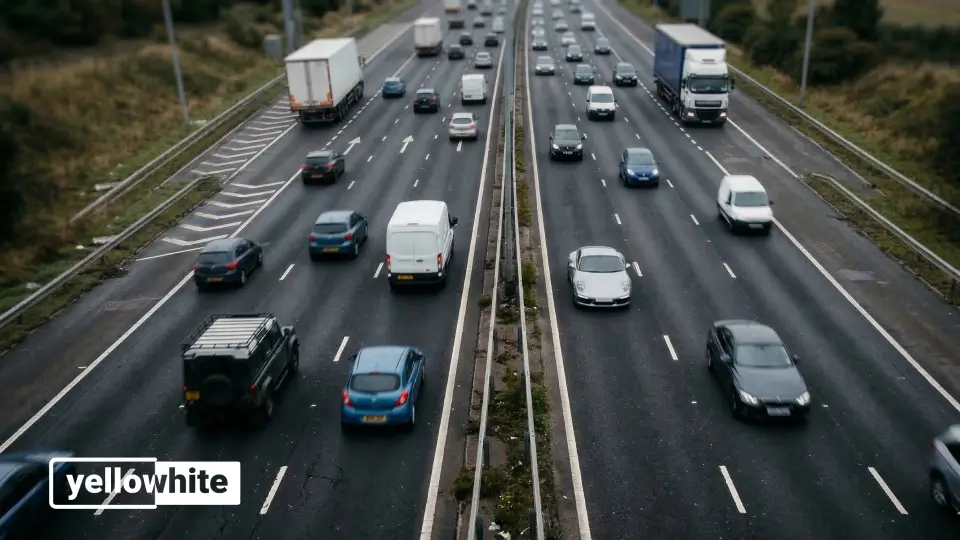
We analysed over 300,000 private number plate purchases made in 2025 to answer one question: which drivers are actually buying private plates, and which aren't?
The results aren't what most people (even our team) expected. Well yes, the flashy prestige cars dominate the headlines, but the real story is happening in white vans and on hybrid driveways. Here's the full picture.
Key findings at a glance
- Ford Transit drivers are more than twice as likely as the average UK driver to have a private plate, making tradespeople and van operators one of Britain's most active private plate buyer groups. From our experience, we see some great company branding happening
- Porsche 911 owners are nearly 5 times more likely than average to personalise their registration which is one of the most over-indexed model in the entire dataset
- A BMW driver is more than twice as likely to have a private plate as a Ford driver, despite both brands selling almost identical total volumes in 2025
- Electric and hybrid car owners are significantly more likely to personalise their plates than petrol drivers
- Dacia owners are the least likely of any major brand to buy a private plate. Less than half as likely as the national average
The brands: who's buying and who isn't
The five biggest brands by total private plates purchased in 2025 were Ford (35,802), BMW (35,370), Volkswagen (34,573), Mercedes-Benz (30,790) and Audi (30,691). Between them, they account for just over half of all private plate purchases in the UK.
But raw volume tells only half the story. To understand which drivers are most likely to personalise, you have to look at how each brand's share of private plates compares to its share of vehicles on UK roads.
The most likely brands
| Brand | How likely vs average |
|---|---|
| Porsche | 3.8× more likely |
| Aston Martin | 2.7× more likely |
| Land Rover | 2.3× more likely |
| BMW | 2× more likely |
| Jaguar | 1.9× more likely |
| Audi | 1.9× more likely |
| Mercedes-Benz | 1.7× more likely |
Porsche leads by a significant margin. Porsche owners are nearly four times more likely than the average driver to have a personalised registration. At this point, a private plate is less a luxury add-on for Porsche buyers and more a standard part of ownership.
Land Rover's position at 2.3× reflects a broader pattern: premium British brands, particularly those with strong identity around individuality and status, over-index heavily.
The least likely brands
| Brand | How likely vs average |
|---|---|
| Dacia | Less than half as likely |
| Toyota | Less than half as likely |
| Honda | Less than half as likely |
| Citroen | Less than half as likely |
| Nissan | About half as likely |
Dacia sits at the bottom. Their buyers are less than 40% as likely as the average UK driver to personalise their plate, entirely consistent with the brand's no-nonsense, anti-ostentation identity. Honda, Toyota and Citroen follow a similar pattern: reliable, rational choices for rational buyers who simply aren't in the market for personalisation.
The models: the Transit is the real story
When you move from brands to individual models, the headline isn't Porsche... it's Ford Transit.
The most common models by volume
| Model | Plates purchased 2025 |
|---|---|
| Ford Fiesta | 10,038 |
| Volkswagen Golf | 9,131 |
| Ford Transit | 8,397 |
| Volkswagen Polo | 7,629 |
| Vauxhall Corsa | 7,039 |
The Transit at #3 is striking. Van drivers and tradespeople purchased over 8,000 private plates in 2025, spending over £3 million between them. Combined with the Volkswagen Transporter at #16 (4,249 plates) and the Ford Ranger pickup at #22 (2,822 plates), it's clear that commercial vehicle operators are one of the most active buyer groups in the market. This fits what we see as, when we look at the photos our customers have sent us, we can see private plates that match their brand, over and over again.
The most likely models
| Model | How likely vs average |
|---|---|
| Porsche 911 | 4.8× more likely |
| Land Rover Range Rover Sport | 4× more likely |
| BMW X5 | 3.4× more likely |
| Mercedes-Benz CLA | 3.4× more likely |
| Audi TT | 3.2× more likely |
| Land Rover Range Rover Evoque | 2.9× more likely |
| Land Rover Range Rover | 2.9× more likely |
| Land Rover Defender | 2.7× more likely |
| Audi A5 | 2.5× more likely |
| Mercedes-Benz GLC | 2.5× more likely |
The Porsche 911 leads at 4.8× — nearly five times more likely than the average UK driver. The Range Rover Sport at 4× and the BMW X5 at 3.4× confirm that high-end SUV ownership correlates strongly with private plate ownership.
The least likely models
| Model | How likely vs average |
|---|---|
| Vauxhall Astra | Less than half as likely |
| Ford Focus | About 40% less likely |
| Nissan Qashqai | About half as likely |
| Vauxhall Corsa | About 12% less likely |
| Ford Fiesta | About 11% less likely |
The Vauxhall Astra sits at the bottom of the model rankings — its drivers are less than half as likely as the national average to personalise. The Ford Focus follows closely. Both are rational, value-focused choices, and their buyer behaviour reflects that.
The entry-level premium paradox
One of the more interesting findings sits in the BMW and Audi entry-level models. The Audi A1 which is the brand's most affordable model, sees its drivers 2.4 times more likely than average to have a private plate. The BMW 1 Series sits at nearly twice as likely.
Both outperform their parent brand averages. Entry-level premium buyers appear to prioritise personalisation at almost the same rate as buyers further up the range which suggests that for someone who has stretched their budget to get into a prestige brand, a private plate is often next on the list.
Fuel type: electric drivers lead on personalisation
The fuel type data produces one of the cleaner findings in the dataset.
| Fuel type | How likely vs average |
|---|---|
| Electric diesel (HGV/commercial) | 2.4× more likely |
| Hybrid electric | 1.3× more likely |
| Electric | 1.3× more likely |
| Diesel | Roughly average |
| Petrol | 12% less likely than average |
Petrol car owners (who make up the majority of UK drivers ) are actually less likely than average to personalise their plate. Electric and hybrid owners are meaningfully more likely, sitting around 30% above the national average.
The EV finding is counterintuitive. You might expect technology-forward EV buyers to be less interested in something as traditional as a private number plate. The data says the opposite. Whether this reflects the demographic profile of early EV adopters, the higher average spend associated with EV ownership, or simply a greater interest in personalisation among this group is an open question, but the pattern is consistent.
Search your make or model
UK Private Number Plate
Statistics 2025
Who's buying private plates — and how likely is your car to have one? Analysis of 339,806 private plate purchases by make, model, and fuel type.
How does your car rank?
Type a make or model to see where it sits in our 2025 data.
⌕
Likelihood vs UK average
Leaderboard
Ranked by likelihood multiplier — how much more or less likely than the average UK driver.
Complete rankings table
All makes and models. Click any column header to sort.
Data based on 339,806 private number plate purchases recorded in 2025, cross-referenced with DVLA vehicle parc figures for the same period. Likelihood multipliers are calculated by dividing a make or model's share of private plate purchases by its share of the total UK registered vehicle parc — a value above 1× indicates above-average propensity to purchase, below 1× indicates below-average. Analysis by Yellowhite (yellowhite.co.uk).
What this tells us about private plate buyers in 2025
The private plate market in 2025 spent £123 million across 339,806 purchases. Three things stand out from the data.
1. Personalisation follows identity, not just income. The strongest over-indexers are brands with a clear identity — Porsche, Land Rover, BMW, Aston Martin. The strongest under-indexers are brands positioned around practicality and value — Dacia, Toyota, Honda. Buyers who choose a car for what it says about them are also the buyers most likely to choose a private plate.
2. Commercial vehicle operators are an overlooked buyer group. The Transit at #3, the Transporter at #16, the Ranger at #22, and the electric diesel fuel type data all point to the same conclusion: tradespeople, owner-operators, and small business owners are purchasing private plates in significant volume. A private reg on a work van functions as both personalisation and effective, low-cost advertising.
3. EV adoption may grow the private plate market. As EVs move from early adopter to mainstream ownership, if the current over-indexing behaviour holds, the pool of likely private plate buyers grows. Whether that holds as EVs reach less engaged buyer demographics is worth watching in the 2026 data.
Methodology
Data is based on 339,806 private number plate purchases recorded during 2025, sourced from transaction records and cross-referenced with GOV vehicle parc figures for the same period. Likelihood figures represent the ratio of a make or model's share of private plate purchases to its share of vehicles on UK roads. A figure above 1× indicates that drivers of that make or model are more likely than the average UK driver to have purchased a private plate; a figure below 1× indicates they are less likely. Models with a UK car parc figure of 0.00% have been excluded from likelihood calculations. Analysis by private plate specialists, Yellowhite (yellowhite.co.uk).
Looking for a private number plate?
Search over 71 million private number plates at Yellowhite. We're the DVLA registered dealer with plates starting from £50. Browsing on a budget? See our cheap private number plates from £50.
Share this research
if you're covering this story, we're happy to provide additional data cuts, commentary or higher-resolution assets. Contact us at email protected.