


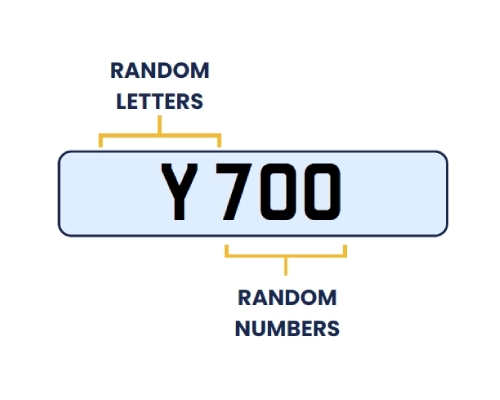
Dateless (Cherished)
1903–1962. No age identifier, so it can go on a vehicle of any age. The rarest and most prestigious style.
The UK format used since September 2001. Two letters, two numbers, three random letters, with the largest pool of personalised combinations of any style.

A current style number plate, also called a new style plate, is the format the UK has used since September 2001. It is made up of two letters, two numbers and three letters, for example AB51 CDE. The first two letters are a regional code, the two numbers identify the age, and the last three are random. It is the format on most cars on UK roads today, and because of those three random letters it offers the largest pool of personalised combinations of any style.
The +50 rule
The two numbers in the middle tell you when the plate was issued. New plates are released twice a year, in March and September.
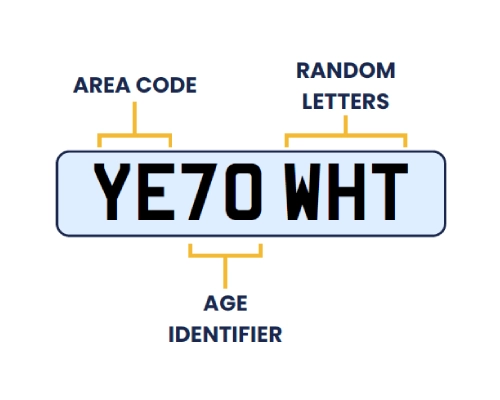
A March plate uses the last two digits of the year. So 25 means March 2025.
A September plate adds 50 to that. So 70 means September 2020.
This is why the very first current style plates, issued in September 2001, used the number 51.
Every age identifier since 2001
March plates on the left, September plates on the right. Each row shows the full registration period.
Check any plate against your vehicle with our free vehicle age checker.
Read any plate
Take AB51 CDE as an example.
AB51 CDEA piece of motoring history
The current style was introduced in September 2001 to provide a clearer, larger system as the prefix style ran out of room. Its twice-yearly release, every March and September, is now a fixture of the car-buying calendar, and the format's three random letters make it the easiest style to find a personalised combination in. For the style that came before, see prefix number plates. For plates with no age restriction, see dateless and cherished plates.
1903–1962. No age identifier, so it can go on a vehicle of any age. The rarest and most prestigious style.
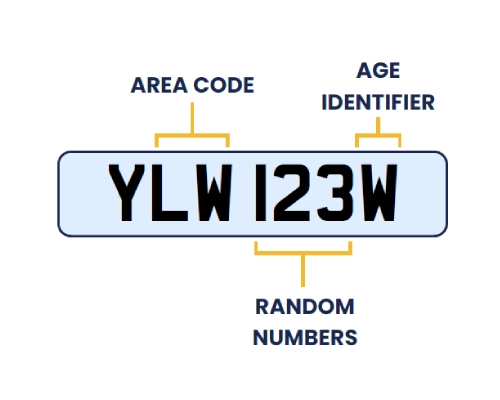
1963–1983. Three letters, a sequence number, then a year letter at the end. The classic plate of the 60s, 70s and early 80s.
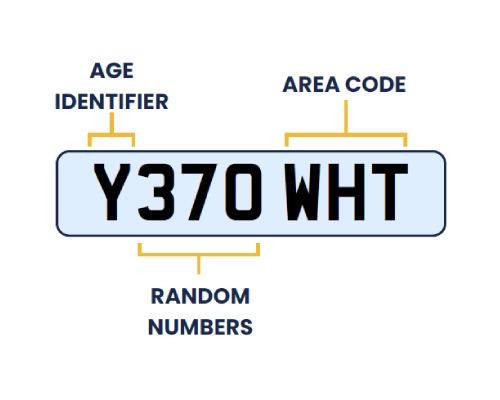
1983–2001. Year letter at the front, followed by numbers and area code letters. The most popular personalised style.

Compare every UK plate style side by side. Years, formats and examples, plus how to read any plate.
A new or current style number plate is the UK format used since September 2001: two letters, two numbers and three letters, such as AB51 CDE. The two numbers show the age and the first two letters show the region.
Read the two middle numbers. A March plate uses the last two digits of the year, so 25 is March 2025. A September plate adds 50, so 75 is September 2025.
A 65 plate is from September 2015. Because 65 is above 50, it is a September registration: 65 minus 50 is 15, giving 2015.
Twice a year, in March and September. The March plate takes the year's last two digits and the September plate adds 50.
They are the local memory tag. The first letter shows the region and the second points to a local registration office where the plate was first issued.
From £40 plus VAT and the £80 DVLA fee. Current style plates offer the largest pool of combinations, so there is plenty of choice at the lower end.
Search 71 million UK registrations from £40 plus VAT and DVLA fee. We handle the paperwork.